
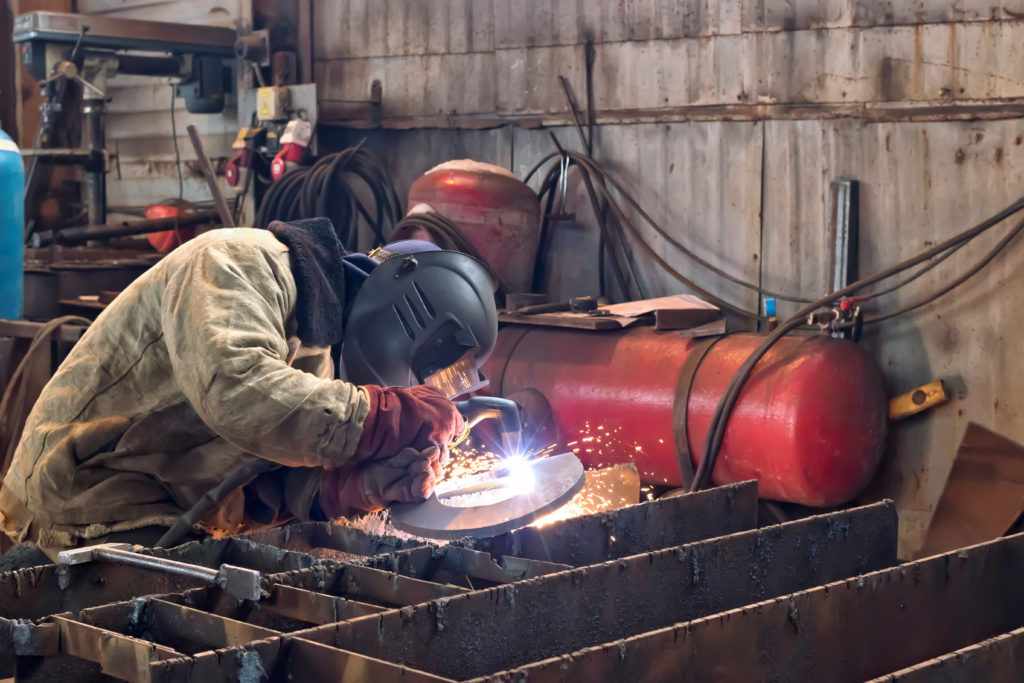
Plasma cutting, while generally easy and efficient, isn’t always as easy as pull and cut. Here, we address some frequently asked questions about plasma cutting from our customers.
Q: What is plasma cutting and how does it work?
A: This process involves melting and expelling materials, such as steel, aluminum, or copper, from a cut using ionized gas. During this process, you establish an electric arc between an electrode and anode.
Q: Can you cut aluminum with a plasma cutter?
A: Yes! You can use a plasma cutter to cut through aluminum as well as many other materials.
Q: What other type of material can be cut with a plasma cutter?
A: Any electrically-conductive material including steel, stainless steel, and copper.
Q: How does a plasma cutter work?
A: You emit an arc of electrical current from the electrode and combine it with swirling gas. Then a nozzle focuses and directs it to the workpiece. The jet of ionized gas is very hot and melts and blows away molten material from the workpiece.
Q: Is plasma cutting difficult?
A: No! An operator with minimal training may learn to use a plasma cutter in just a few minutes.
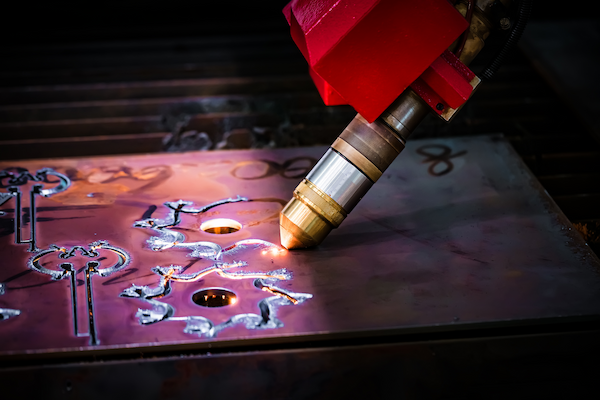
Q: When should I change my consumables?
A: You should change the electrode when the emitter pit depth reaches 1mm (2mm for silver electrodes). You should change the nozzle when changing the electrode or when the orifice becomes out of round. The remaining consumables should be changed as needed when they become unserviceable.
Q: Why does the arc from my plasma cutter sometimes turn green?
A: You have exceeded the life of the electrode and the emitter has been depleted. The arc is now being emitted from the copper surrounding the emitter pit and the green color is oxidized copper. Stop cutting immediately and change your electrode and nozzle!
Q: Can the original equipment manufacturer void my warranty for using aftermarket consumables?
A: Absolutely not! The Magnuson-Moss Warranty Act prohibits companies from requiring the use of their brand of consumables in order to maintain warranty coverage.
Q: When should I change my coolant?
A: According to your machine’s preventative maintenance schedule or when it becomes contaminated or electrically conductive.

Q: Is plasma cutting better than oxy-fuel cutting?
A: That depends. Plasma cutting is easier to learn, safer, and faster on thin material. It can also cut materials that oxy-fuel cannot, such as aluminum. On thicker material, however, oxy-fuel often has a faster cut speed and can cut steel far thicker than plasma.
Q: Can I plasma cut expanded metal or grating?
A: Yes. If your plasma cutting system has a continuous pilot arc mode, you’ll want to engage this feature to cut grating or expanded metal. If not, you’ll have to manually fire the arc each time you move between slats.
Q: Can a plasma cutter be used for gouging?
A: Yes, with the proper torch and consumables. Gouging is a slightly different process than cutting and not every manufacturer offers gouging torches and consumable options.
Q: What is CNC plasma cutting?
A: CNC stands for Computer Numerical Controlled. In CNC plasma cutting, a table and gantry are used and the torch movement and arc initiation is controlled by a program loaded into specialized computer software. CNC plasma cutting allows for the highest degree of quality and repeatability for high-volume part production.
Q: What is dross in plasma cutting?
A: Dross occurs when you melt metals and then it re-solidifies and is not ejected from the kerf. This can cause problems with the quality of your cut. But with the right plasma cutting processes, you can minimize dross.
Improve Your Plasma Cuts with American Torch Tip
In order to reduce dross and ensure clean cuts, you need a high-quality plasma cutter like our PHD/PHDX, Cleancut, and Heliocut torches and consumables.
To learn more about plasma cutting download our complete Plasma Troubleshooting Guide which discusses common challenges and their solutions as well as 7 tips to improve your cut quality!
If you have further questions about plasma cutting, feel free to reach out to us. We are happy to answer them for you!
Sign up for our Monthly Newsletter
Join our community of over 20,000 industry experts and subscribe to our newsletters to receive product announcements and offers.